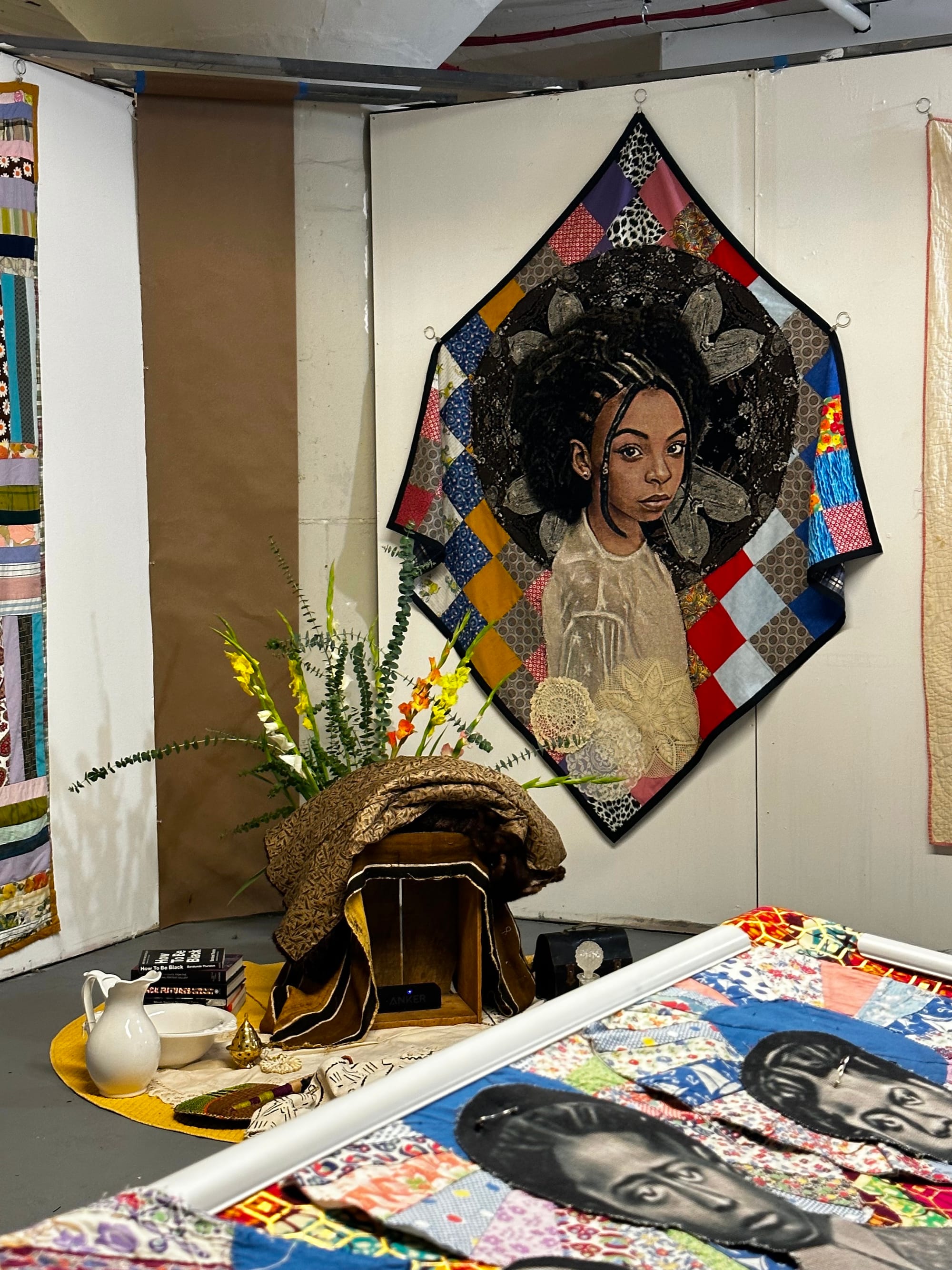
Welcome to the 319th installment of A View From the Easel, a series in which artists reflect on their workspace. This week, artists yearn for higher ceilings and find inspiration in the solitude of their studio.
Want to take part? Check out our submission guidelines and share a bit about your studio with us through this form! All mediums and workspaces are welcome, including your home studio.
XiaoXiao Wu, San Gabriel, California
How long have you been working in this space?
Five years.
Describe an average day in your studio.
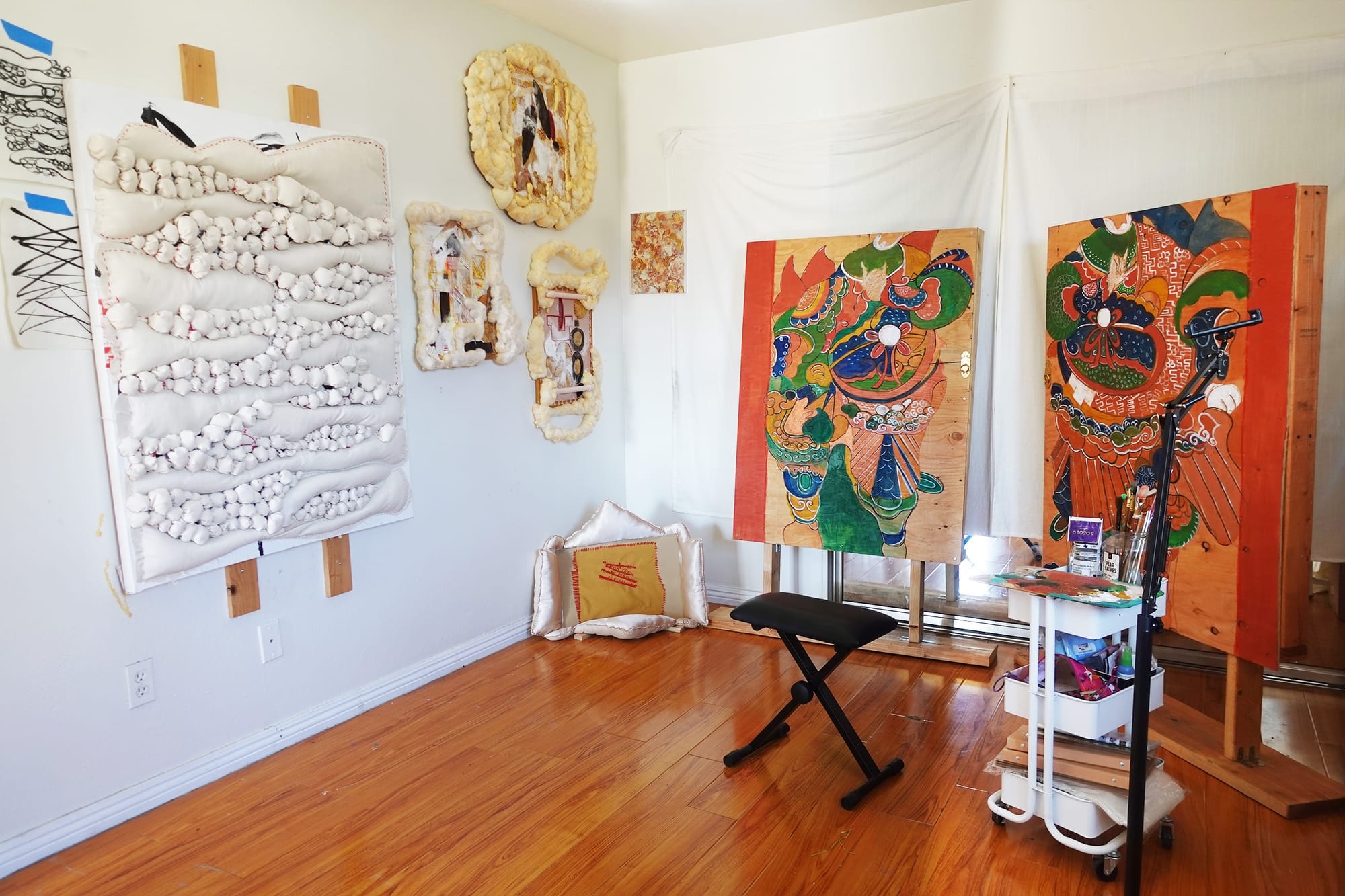
An average day in my home studio starts around 8am or 9am, four to five days a week. The space is mainly for concentration, so I avoid eating or any entertainment while working. I usually develop two or three projects at the same time, moving between sewing, assembling, and filming. Weekends are for openings and exhibitions. Most days end in the late afternoon, and I work with history podcasts playing as I focus on the tasks in front of me.
How does the space affect your work?
A lot of my practice looks at how women’s spaces extend or shift — from domestic rooms to the body and everyday labor — so working in a home studio becomes part of that reference. The room feels like a simple mirror to the installations and soft pieces I make. Its small scale and limits make me consider how “female space” is built, compressed, or adjusted, and that thinking slips directly into the work.
How do you interact with the environment outside your studio?
My home studio is in an East Asian immigrant neighborhood, so the surroundings are part of my daily routine. I often stop by family-style East Asian restaurants and local supermarkets and talk with the shop owners. These conversations and small interactions give me a sense of the community I work in. On weekends I visit openings across Los Angeles, and I enjoy moving between these two different settings — the art world and the neighborhood’s everyday life.
What do you love about your studio?
I love that my studio is only a few steps away from where I live. It lets me shift quickly between daily life and making work without breaking focus. The space feels like a small shell with two sides — one for working and one for living — and I like the way those two scenes stay close but still remain separate.
What do you wish were different?
I sometimes wish the studio had higher ceilings and older, more industrial walls. My work often involves hanging textiles and larger soft structures, and more height would help me test them properly. I’m also drawn to spaces with an older atmosphere — the worn surfaces and slight roughness make me feel more grounded and comfortable when I work.
What is your favorite local museum?
The Hammer Museum.
What is your favorite art material to work with?
I don’t have a single favorite material — my work usually combines textiles, simple hardware, and everyday objects. I appreciate how these materials can transition between soft, structural, and spatial roles depending on their arrangement. Working with a mix of elements lets me build installations that respond directly to the body and to the space I’m in, instead of committing to one fixed medium.
Desmond Beach, Brooklyn, New York
How long have you been working in this space?
Three and a half years.
Describe an average day in your studio.
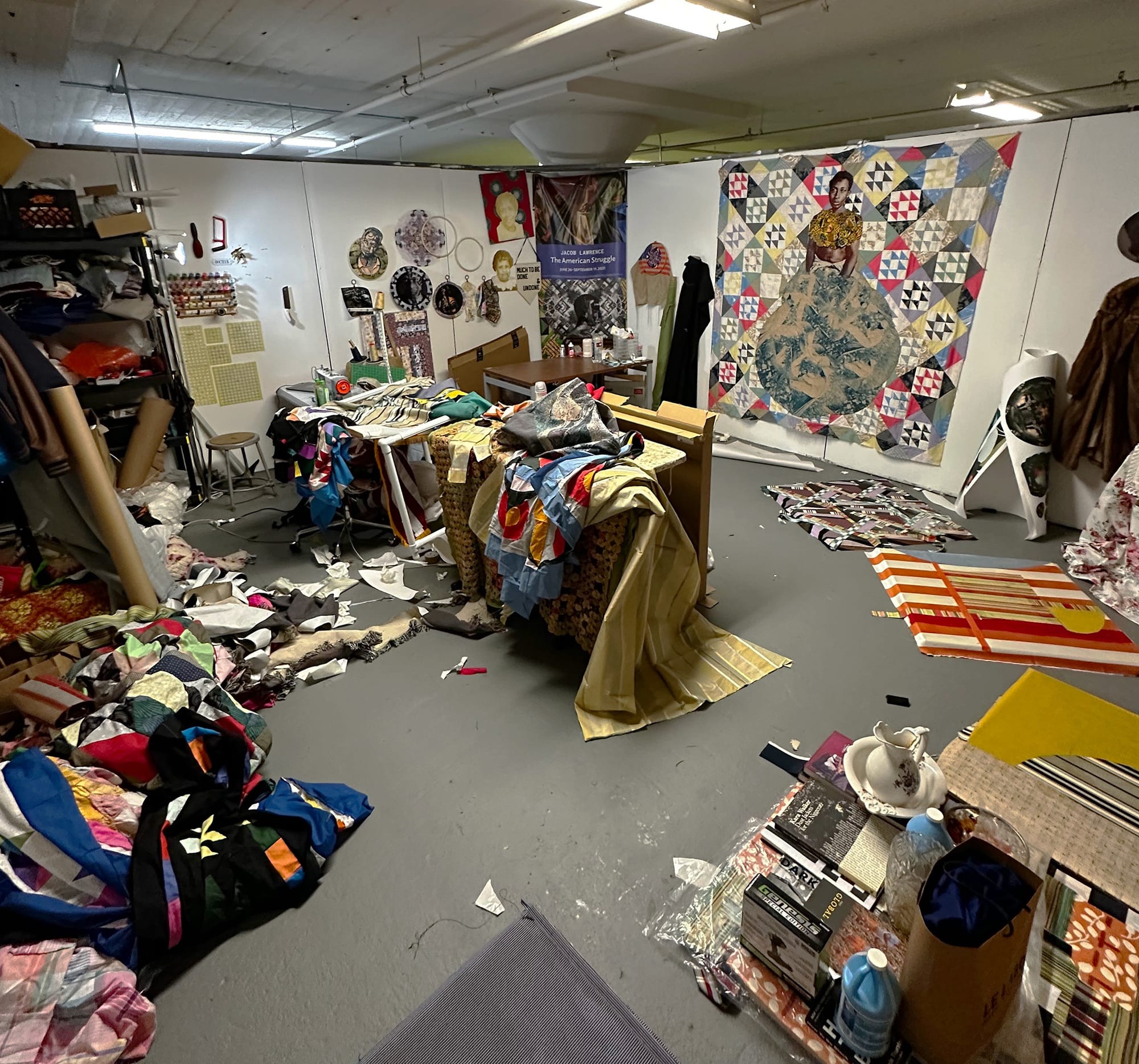
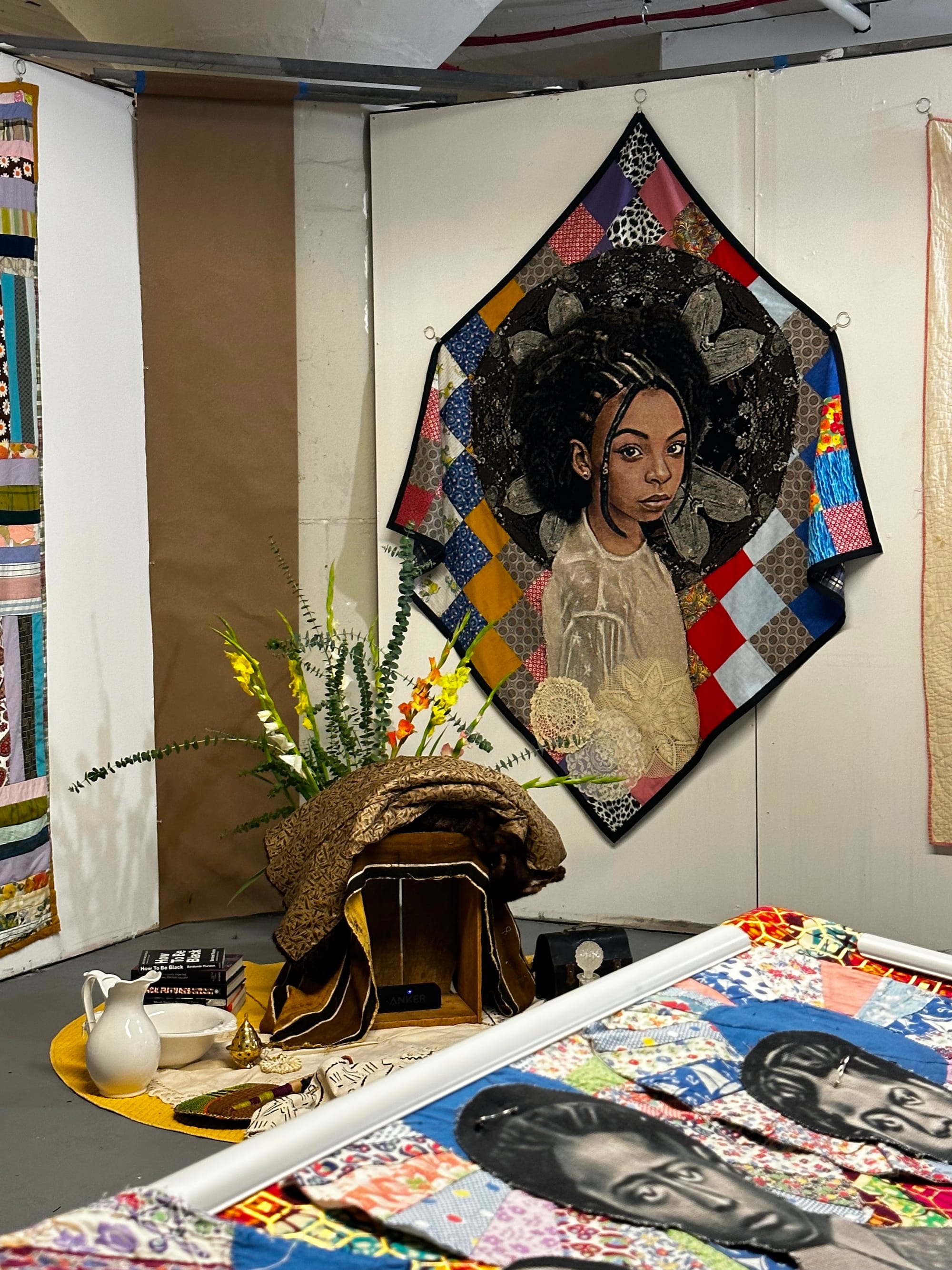
An average day in my studio begins slowly and deliberately. I usually arrive mid-morning, allowing myself time to transition into a more inward, attentive state. The first moments are quiet: I straighten materials, lay out works-in-progress, and take stock of what feels most urgent or receptive that day. My practice is guided less by rigid scheduling than by listening, both to my body and to the work itself.
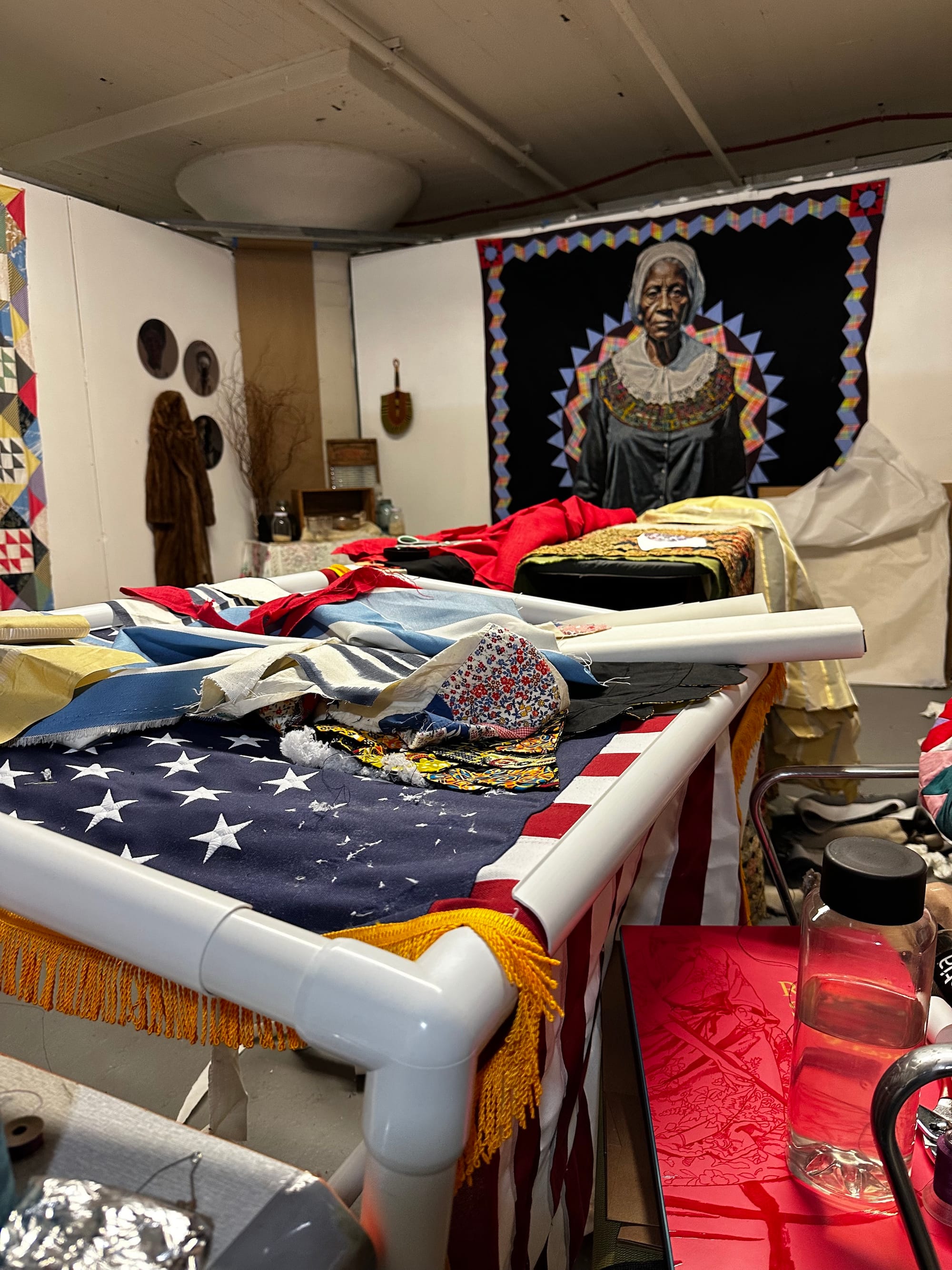
My studio functions as an ecosystem: fiber works rest alongside sound recordings, performance materials, and notes from readings or memories that surface unexpectedly. Moving between works allows me to follow intuition, memory, and repetition rather than forcing completion. Sound is an essential companion. I frequently listen to spirituals, gospel, jazz, or recorded sermons, oral histories, and interviews related to Black cultural memory. At times I work in near silence, especially when writing or recording sound, allowing subtle rhythms, breath, fabric, footsteps to guide the process.
How does the space affect your work?
I work in a studio without windows or natural light, which creates a contained, inward-focused environment. Materials can remain visible and unfinished, and ideas are able to accumulate slowly over time. The studio becomes a holding space, a kind of interior landscape where memory and process are allowed to unfold.
Scale and privacy are equally important. Open floor space makes it possible to handle works — to lift, drape, mend, and sit with them. This supports the vulnerability and care required by work rooted in personal and collective histories. In this way, the studio is not neutral; it operates as a container that shapes the emotional register of the work and allows making to function as sustained attention, reflection, and repair.
How do you interact with the environment outside your studio?
Each day begins with a 10-minute walk from the subway to the building where my studio is located. That walk functions as a threshold, an intentional passage from the pace of the city into a more inward, receptive state. By the time I reach the studio, I am mentally and spiritually prepared to engage the work with focus and care. This daily transition is not incidental; it is a quiet ritual that helps align intention, memory, and attention before making begins. Leaving the studio often involves taking the ferry, and that experience offers a different kind of transition. The rhythm of the water, the widening horizon, and the changing light create space for reflection and release. The ferry ride acts as a counterbalance to the intensity of making, an outward movement that restores equilibrium before returning home.
My relationship to the immediate neighborhood is more contemplative than social. The building and its surrounding environment provide the conditions for movement, pause, and transition. Together, the walk into the studio and the ferry ride away frame the studio day.
What do you love about your studio?
What I love most about my studio is the sense of containment it offers. The absence of windows creates an interior world where time slows and attention deepens. The studio feels protected — like a vessel that holds memory, process, and unfinished thoughts without urgency or interruption. I also love that the studio can remain in a state of becoming. Works-in-progress stay visible, materials are left out, and gestures accumulate rather than being erased at the end of the day.
Most of all, I love that the studio supports a way of working grounded in care. It is a place where making is slow, deliberate, and embodied — where labor, memory, and reflection coexist. The studio does not demand productivity; it allows for listening. In that sense, it is not just where the work is made, but where I am able to remain in dialogue with it.
What do you wish were different?
The scale. I wish the studio were even larger, with higher ceilings and taller walls, allowing the work to expand more fully in all directions. More floor space would support larger installations and provide greater freedom to move, assemble, and live with the work over time.
I also imagine the possibility of a separate sitting room with a window, where I could step away from making and sit quietly in natural sunlight. Having a distinct area for pause and reflection would create a balance between intense focus and rest, offering a place to look outward, breathe, and gather myself before returning to the work.
What is your favorite local museum?
My favorite local museum is the Studio Museum in Harlem, for its deep commitment to artists of African descent and its role as a vital space for experimentation, dialogue, and cultural stewardship. It is a museum I frequently visited while in graduate school, in large part because the works on view allowed me to see myself reflected in the galleries. Walking into that space was, and continues to be, deeply affirming. There is a particular power in entering a museum where Black life, thought, and imagination are centered, and where reflection becomes recognition rather than absence.
What is your favorite art material to work with?
My favorite material to work with is fiber. Cloth and thread carry history, labor, and touch, holding memory through gesture, time, and care.